Does My Dog Love Me? Tips for Dealing With a Taciturn Canine
Published in Cats & Dogs News
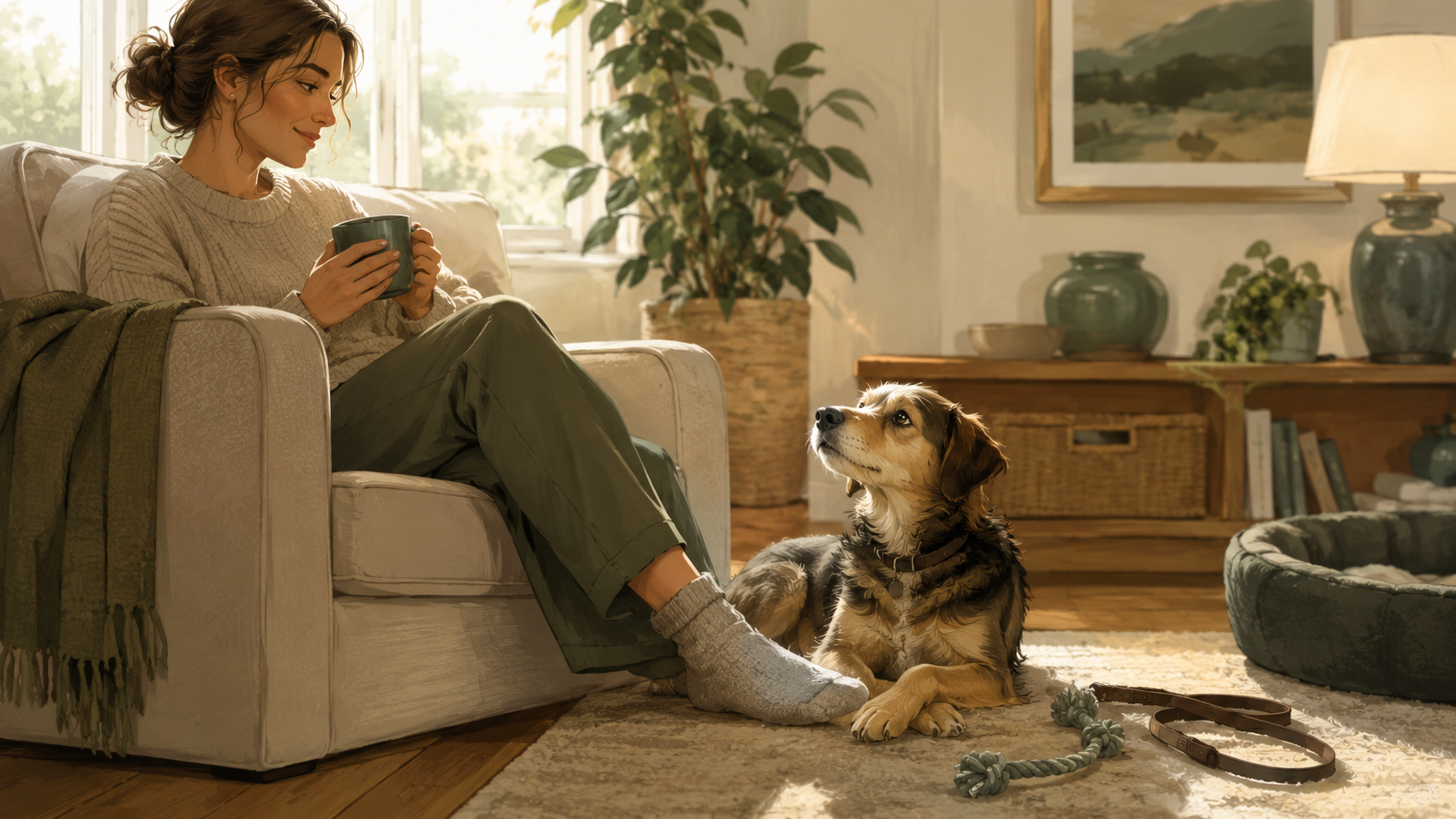
Some dogs throw themselves into affection. They leap, wiggle, lick, whine, wag and collapse into their favorite person’s lap as if every reunion is a homecoming parade.
Other dogs are more reserved. They follow quietly. They sleep nearby. They accept a scratch behind the ears, then wander off. They may not gaze lovingly into your eyes or erupt with joy when you come home. They might seem more like an old roommate than a devoted companion.
For owners of these taciturn dogs, the question can creep in: Does my dog love me?
The answer is often yes. Your dog may simply be speaking in a quieter language.
Look for proximity, not performance
Many people expect canine love to look loud. But for some dogs, affection is expressed through simple nearness.
A reserved dog may not climb into your lap, but he may choose the rug beside your chair. He may sleep at your feet, follow you from room to room or position himself where he can keep an eye on you. That quiet orbit is not indifference. It is attachment.
Some dogs are especially subtle. They check in, then go back to their own business. They may walk ahead on a trail but glance back to make sure you are there. They may settle just outside touching distance. For a dog with an independent temperament, that can be a strong sign of trust.
Do not underestimate the meaning of “near but not needy.” For many dogs, love is not a performance. It is presence.
Notice the dog’s preferred rituals
A taciturn dog may not enjoy every common display of affection. Some dislike hugs. Some tolerate kisses but do not seek them. Some enjoy being petted only in certain places or at certain times.
Instead of asking whether your dog loves you in human terms, ask what rituals your dog chooses.
Does he bring you a toy without wanting to play for long? Does he sit calmly while you put on his harness? Does he come to you when he is unsure? Does he press his shoulder against your leg, lean briefly into your hand or rest his chin nearby?
These small rituals are often more revealing than dramatic displays. They show where your dog feels safe and what kind of connection he understands.
Respect the quiet dog’s boundaries
A dog who is not openly demonstrative may become even more withdrawn if affection is forced on him.
Let him choose contact when possible. Offer a hand, then wait. Pet for a few seconds and pause. If he leans in, nudges you or stays close, continue. If he turns away, licks his lips, yawns, stiffens or moves off, give him space.
This is not rejection. It is communication.
Respecting those limits can deepen the bond. The dog learns that closeness with you does not mean being trapped, grabbed or overwhelmed. Over time, many reserved dogs become more affectionate when they realize they are free to say no.
Build confidence through routine
Dogs often show love most clearly when they feel secure. Predictable routines help.
Meals, walks, bedtime habits, grooming and play sessions all create a shared rhythm. A taciturn dog may not gush with emotion, but he may come alive when the leash appears or settle peacefully when the nightly routine begins.
Routine also gives anxious or cautious dogs fewer decisions to make. They know what comes next. They know where they belong. That sense of order can make affection easier for them to express.
For some dogs, a quiet evening on the couch, a steady walk around the same familiar route or a few minutes of brushing may mean more than an energetic game.
Use training as conversation
Training is not just about obedience. It is a way to communicate.
Short, positive training sessions can help a reserved dog engage with you. Keep them simple and upbeat. Practice basic cues, reward eye contact, teach a new trick or work on calm leash manners. The point is not to create a perfect performer. The point is to build a shared language.
A dog who is not naturally cuddly may still love problem-solving with you. He may enjoy earning praise, treats or access to something he wants. Training gives him a way to interact that does not require emotional intensity.
For taciturn dogs, that can be ideal. It says, “We are doing something together,” without demanding theatrical affection.
Consider temperament and history
Some dogs are born reserved. Breed tendencies, early socialization, age and individual personality all matter. A livestock guardian, hound, terrier or northern breed may express attachment differently than a retriever bred to work closely with people.
Rescue dogs may also carry history. A dog who was neglected, shuffled between homes or punished harshly may take months or years to fully relax. Others may bond deeply but remain cautious about physical closeness.
Older dogs can be quieter, too. Arthritis, hearing loss, vision changes or fatigue may make a dog seem less engaged. If a once-affectionate dog becomes withdrawn, irritable or unusually distant, a veterinary checkup is wise.
A taciturn personality is normal. A sudden change may be a sign that something is wrong.
Do not compare your dog to someone else’s
Comparison can make owners miss the dog in front of them.
Your neighbor’s dog may greet everyone like a celebrity. Your dog may offer one slow tail wag and return to his nap. That does not mean your bond is weaker. It means your dog has a different emotional style.
Look for patterns. Does your dog relax when you enter the room? Does he seek you out during storms or strange noises? Does he accept care from you more easily than from others? Does he choose your company when he has options?
Those are meaningful answers.
Give love in the form your dog understands
For some dogs, love is a long walk. For others, it is a food puzzle, a warm bed, a steady routine, a scratch under the chin or the privilege of lying quietly beside you.
The goal is not to turn a quiet dog into a demonstrative one. The goal is to recognize his language and answer it.
If your taciturn dog chooses to be near you, trusts you with his body, looks to you for guidance and rests more easily in your presence, he is telling you plenty.
He may not be loud about it. He may not be sentimental. He may not give you the movie version of devotion.
But in his own understated way, he may be saying the thing you hoped to hear all along: You are his person.
========
Marian Bellweather is a freelance lifestyle and companion-animal writer based in the Midwest. Her work focuses on practical pet care, family life and the small daily rituals that make a house feel like home. This article was written, in part, utilizing AI tools.



Comments