Cats and dogs, living together: 5 tips for avoiding conflicts in a mixed household
Published in Cats & Dogs News
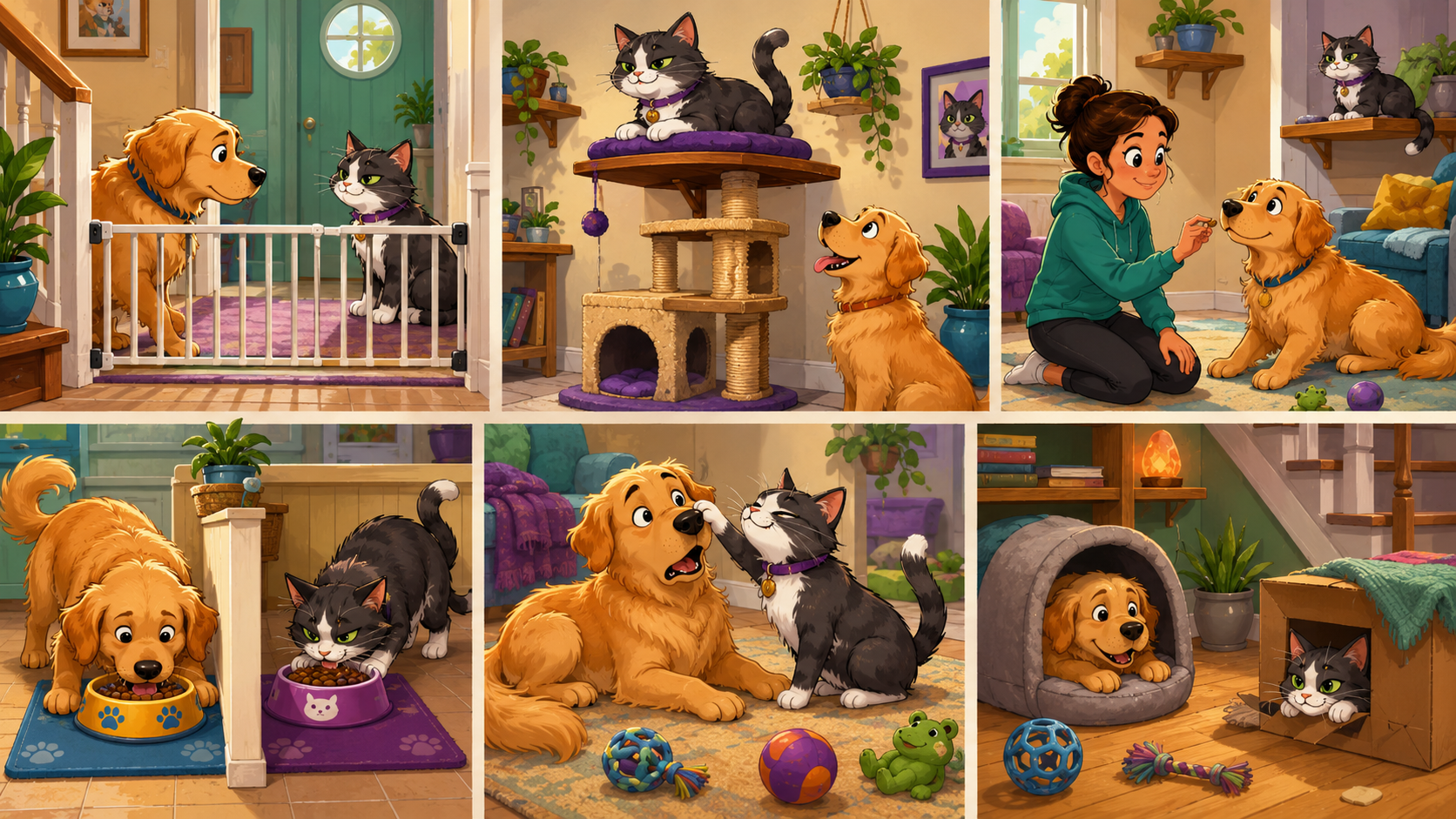
Cats and dogs can live together peacefully, but it usually does not happen by accident. A calm mixed-pet household depends less on luck than on planning, patience and a clear understanding that cats and dogs often read the world in very different ways.
Dogs tend to be social, direct and curious. Cats are often more territorial, cautious and sensitive to sudden movement. A wagging tail, a fast approach or an excited bark may look friendly to a dog, but to a cat it can feel like a threat. Meanwhile, a cat’s swat, hiss or retreat can confuse a dog that only wanted to play.
The goal is not to force instant friendship. The goal is to create a home where each animal feels safe, respected and able to move away when needed. Over time, many cats and dogs become companions, playmates or at least polite roommates. The best results come when owners set them up for success from the start.
Introduce them slowly
The biggest mistake many owners make is putting a cat and dog together too quickly and hoping they “work it out.” That can create fear, chasing and long-term tension.
Start with separation. Let the animals smell each other through a closed door before they meet face to face. Swap bedding or blankets so each pet can become familiar with the other’s scent. Feed them on opposite sides of a closed door so they begin to associate the other animal’s presence with something positive.
When it is time for a visual introduction, keep the dog leashed and calm. Use a baby gate, crate or other barrier so the cat can observe without being cornered. Keep the first sessions short. End before either animal becomes overwhelmed.
Reward calm behavior. A dog who looks at the cat and then looks back to you deserves praise or a treat. A cat who stays in the room without panicking should be allowed to leave whenever she chooses. Progress may take days, weeks or even months, especially with older animals or pets with difficult histories.
Give cats vertical space and escape routes
In a mixed household, a cat needs places where the dog cannot follow. This is not optional. It is the cat’s safety system.
Cat trees, window perches, shelves, tall furniture and gated rooms give cats the ability to retreat and observe from above. Many cats feel more secure when they can watch the dog from a high place instead of being trapped at floor level.
Escape routes matter just as much. A cat should never have to run past the dog to get to food, water, a litter box or a favorite resting spot. If the dog blocks a doorway or hallway, the cat may feel threatened even if the dog is only standing there.
Baby gates with small cat doors can be useful. So can rooms that are cat-only areas. A spare bedroom, laundry room or office can become a sanctuary with food, water, litter, scratching surfaces and a comfortable bed.
When cats know they can escape, they are less likely to lash out. When dogs learn that the cat’s safe zones are off-limits, the whole household becomes calmer.
Teach the dog impulse control
Many cat-dog conflicts begin with the dog, not because the dog is bad, but because dogs often get excited. A dog who chases, crowds, barks at or paws at a cat can make the cat feel unsafe very quickly.
Teach basic cues such as “leave it,” “stay,” “come,” “settle” and “place.” Practice these before expecting the dog to behave calmly around the cat. A dog who cannot control himself in ordinary situations will not magically become polite when a small, fast-moving animal runs across the room.
Reward calm observation. If the dog notices the cat but does not chase, mark that behavior with praise or a treat. The goal is to teach the dog that ignoring the cat or staying relaxed is more rewarding than lunging or barking.
Do not allow chasing “just for fun.” Even if the dog seems playful, the cat may experience it as terror. Once chasing becomes a habit, it can be difficult to stop. Interrupt early, redirect the dog and give him something else to do, such as going to his bed or working on a chew toy.
Some dogs have strong prey drive and may never be safe unsupervised with cats. In those cases, management is not failure. It is responsible ownership.
Protect food, litter boxes and resting places
Resources can create tension between pets. Food bowls, treats, beds, toys, sunny spots and human attention can all become sources of conflict.
Feed cats and dogs separately. Cats should be able to eat without a dog hovering nearby. Dogs should not have access to cat food, which can cause stomach upset and encourage pestering. Feeding cats on a counter, shelf or behind a gate can help.
Litter boxes should always be in places the cat can reach easily and the dog cannot bother. Dogs may raid litter boxes, which is unpleasant for owners and stressful for cats. Covered boxes are not always enough. A gated room or elevated access point is often better.
Resting places also matter. A cat curled up in a chair does not need a dog nosing in. A dog sleeping in his bed should not be harassed by a curious cat. Teach all pets that sleeping animals are left alone.
Human attention can also spark jealousy. Give each pet individual time. A few quiet minutes of brushing the cat or taking the dog for a walk can prevent competition from building.
Supervise, separate and adjust as needed
Even in a peaceful home, supervision is important. Animals can have bad days. A sore joint, a loud noise, a new visitor or a change in routine can make a normally tolerant pet more reactive.
Do not leave cats and dogs together unsupervised until you are confident they are safe. For some households, that may happen quickly. For others, separation may remain necessary when owners are away.
Watch body language. A relaxed dog has a loose body, soft eyes and the ability to turn away. A dog who stiffens, stares, crouches, barks or fixates may be too aroused. A relaxed cat may blink, groom, stretch or move normally. A cat who hides, hisses, growls, swishes her tail sharply or flattens her ears is asking for space.
If tension increases, slow down. Go back to barriers, shorter meetings or more separate time. Progress is not always a straight line.
Mixed households work best when owners stop thinking in terms of forcing friendship and start thinking in terms of building trust. A cat does not have to love the dog. A dog does not have to become the cat’s best friend. Peaceful coexistence is a worthy goal.
With time, structure and respect for each animal’s needs, cats and dogs can share a home successfully. Sometimes they become inseparable. Sometimes they simply learn to pass each other in the hallway without drama. Either outcome is a win.
========
Marin Ellery is a home and pet care writer who focuses on practical advice for everyday households. She writes about animal behavior, family routines and creating calmer spaces for people and pets. This article was written, in part, utilizing AI tools.








Comments