Pets
/Home & Leisure
/ArcaMax
Ask The Vet: Painful Tooth Resorption Common in Cats
Q: The veterinarian says my cat has tooth resorption, so I made an appointment for her to have dental X-rays and probably tooth extraction. What can you tell me about this condition?
A: Tooth resorption, previously called feline odontoclastic resorptive lesions or neck lesions because they're often seen on the neck of the tooth where the ...Read more
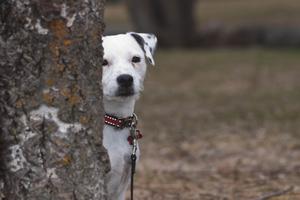
My Pet World: Patience helps shy dogs learn to trust new people
Dear Cathy,
We (my mom and I) recently adopted a small mixed seven-year-old (possibly min pin/dachshund). We hit the jackpot with her. She’s sweet, adorable, and has no bad habits. We don’t know her back story.
Her only “fault” is that she does not like anyone visiting us. She growls but never tries to bite. She allows my brother to ...Read more
Video
No body
Video
No body
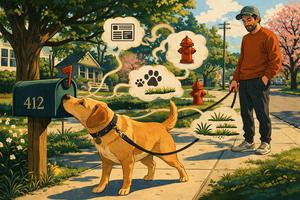
The Neighborhood Newspaper: Why Your Dog Knows More Than You Do”
A dog pauses at the edge of a yard, nose pressed low, tail held in quiet concentration. To the human at the other end of the leash, it looks like hesitation, distraction, or stubbornness. But to the dog, it is something else entirely — a moment of reading, of gathering information, of catching up on everything that has happened since the last ...Read more

Runaways With a Map: How a Pack of Escaped Dogs Navigated Home in China
When ten dogs slipped out of a boarding facility in China, the expectation was simple: they would scatter, get lost, or require an organized search to be found. Instead, what followed has become one of those quietly remarkable animal stories that lingers in the mind. One by one, and in some cases in small groups, the dogs made their way back to ...Read more
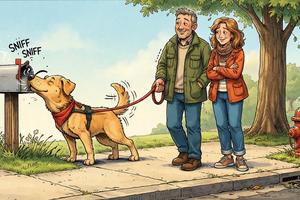
The Door Is Not the Destination: Why Your Dog Cares More About the Journey Than the Walk
The leash comes out, and the dog reacts immediately. There is excitement, anticipation, a burst of energy that suggests something significant is about to happen. To the human, the meaning is clear: it is time for a walk. But once outside, the pace changes. The dog slows, stops, sniffs. A few steps forward are followed by a pause. What appeared ...Read more

Pets in homeless shelters? Allowing them can preserve 'a life-saving bond'
SAN DIEGO — Babygirl, a young dachshund and chihuahua mix with long, golden hair, became homeless during the pandemic. So did her owner, and he searched far and wide for a shelter that would take the two of them.
Yet many programs in San Diego County only accepted humans.
“That was my deal breaker,” said Benjamin Noss, Babygirl’s 51-...Read more
Ask The Vet: Dog Saliva Is Not Antiseptic
Q: After my dog Lola was spayed, her veterinarian fitted her with a plastic Elizabethan collar, or E-collar, to prevent her from licking her surgical incision. Fortunately, the incision is healing well. Why do dogs lick their wounds, and why would our vet want to prevent it? I thought dog saliva contained an antiseptic that made licking ...Read more
My Pet World: When sweet pets send strong signals
Dear Cathy,
Our sweet Golden Retriever growls if anyone comes near her when she has a bone. She has never bitten, but it makes us nervous, especially when our grandchildren visit. Should we take the bones away altogether, or is there a way to fix this?
– Patricia, Chicago, Illinois
Dear Patricia,
What you’re describing is called resource...Read more

The Spot: How Your Pet Quietly Claims the Best Place in the House
In most homes, there is a place that doesn’t appear on any floor plan.
It is not the couch, though it may be on it. Not the bed, though it may overlap. It is smaller, more specific — a square of sunlight that arrives midafternoon, a worn patch of rug near a doorway, the exact cushion that dips just enough. And in households with pets, that ...Read more

'Dogue' vs. 'Vogue'
A niche pet-fashion publication with a playful name has found itself in the middle of a serious legal dispute, as Condé Nast, publisher of the iconic fashion magazine Vogue, has filed suit against a small independent outlet called “Dogue.”
At the center of the case is a familiar question in intellectual property law: when does homage or ...Read more
When Your Pet Trains You
It usually starts small. A nudge at the same time each morning. A stare that lingers just a little too long near the treat cabinet. A quiet refusal to go outside in the rain. These moments feel incidental at first — quirks, habits, personality — but over time they form a pattern. And before long, the pattern becomes routine.
What many pet ...Read more

Big dog, little dog, what's the difference?
Big dogs and little dogs share the same designation — “man’s best friend” — but anyone who has lived with both knows they operate on entirely different wavelengths.
The divide isn’t just about size. It’s about expectations, behavior, physical presence and the way humans respond to them. A 10-pound dog and a 70-pound dog may both ...Read more
Dealing with an indoor/outdoor cat
WILLIAMSBURG, Va. — In neighborhoods where suburban calm meets a touch of the wild, a familiar figure slips between worlds: the indoor/outdoor cat. One moment it is curled in a sunbeam, the next it is padding across a fence line, alert to every rustle of leaves and distant call of a hawk. For many cat owners, this dual life offers a compelling...Read more
Ask the Vet: Anti-anxiety Medication Helps Cat Relax at Animal Hospital
Q: My kitty Simba is a pussycat at home, but he turns into a lion every time we go to the animal hospital. The staff is gentle with him, but he hisses and growls, and I'm afraid he will bite them. What should I do?
A: Before your next visit, ask your veterinarian about an anti-anxiety medication such as gabapentin for Simba. It's easily mixed ...Read more
My Pet World: Redirected aggression in cats – and the right collar for your dog
Dear Cathy,
We got our two tabby cat sisters when they were three months old. They’ve always been very close – snuggling, sleeping and grooming each other. Two weeks ago, they were sitting together in our basement window around 11 p.m. when my son heard them hissing and slapping at the glass. There must have been a cat or raccoon outside ...Read more

Tiny, raucous monk parakeets from South America thrive in Chicago. But why?
CHICAGO — At a quiet street intersection in Chicago's Englewood neighborhood, the imposing figure of a pine tree is only outweighed by the massive collection of sticks and twigs carefully placed on its branches. It’s a huge communal nest for monk or Quaker parakeets, who have called the structure home for the last 25 years or so.
...Read more
Forced to Choose Between Love and a Pet's Loyalty
Dear Annie: A friend of mine is facing a painful choice, and I can't stop thinking about it. She has dogs she loves dearly, but the man she's dating is allergic. Not "a little sneezy," but truly can't be around them. She feels like she's being asked to choose between her pets and a relationship that could become something real.
I keep thinking ...Read more
Ask The Vet: Gastropexy Prevents Dog's Stomach From Twisting
Q: We recently welcomed a Labrador retriever puppy into our family. Our veterinarian recommends that during her spay surgery, the surgeon attach her stomach to her body wall to prevent it from twisting. Is this "gastropexy" procedure safe?
A: Gastropexy is a standard, low-risk surgical procedure to prevent GDV, or gastric dilatation volvulus, ...Read more
Inside Pets
Popular Stories
Related Channels

America's Test Kitchen
By America's Test Kitchen

ArcaMax Chef
By ArcaMax Chef

Ask The Builder
By Tim Carter

Ask The Vet
By Dr. Lee Pickett

Celebrity Travel
By Jae-Ha Kim

Dear Monty
By Richard Montgomery

Do It Yourself Or Not
By Gene and Katie Hamilton

Eric's Autos
By Eric Peters

Everyday Cheapskate
By Mary Hunt

Focus on the Family
By Jim Daly

Georgia Garvey
By Georgia Garvey

Here's How
By

Jeff Rugg
By Jeff Rugg

Lenore Skenazy
By Lenore Skenazy

Living Space
By Kathryn Weber

My Pet World
By Cathy M. Rosenthal

Real Estate Matters
By Ilyce R. Glink and Samuel J. Tamkin

Recipes by Zola
By Zola Gorgon

Rick Steves' Europe
By Rick Steves' Europe

Taking The Kids
By Eileen Ogintz

Travel & Adventure
By Various authors

Travel Troubleshooter
By Christopher Elliott
Comics