Is It Goth or Steampunk? Cosplay Meets Your Daily Wardrobe
Published in Fashion Daily News
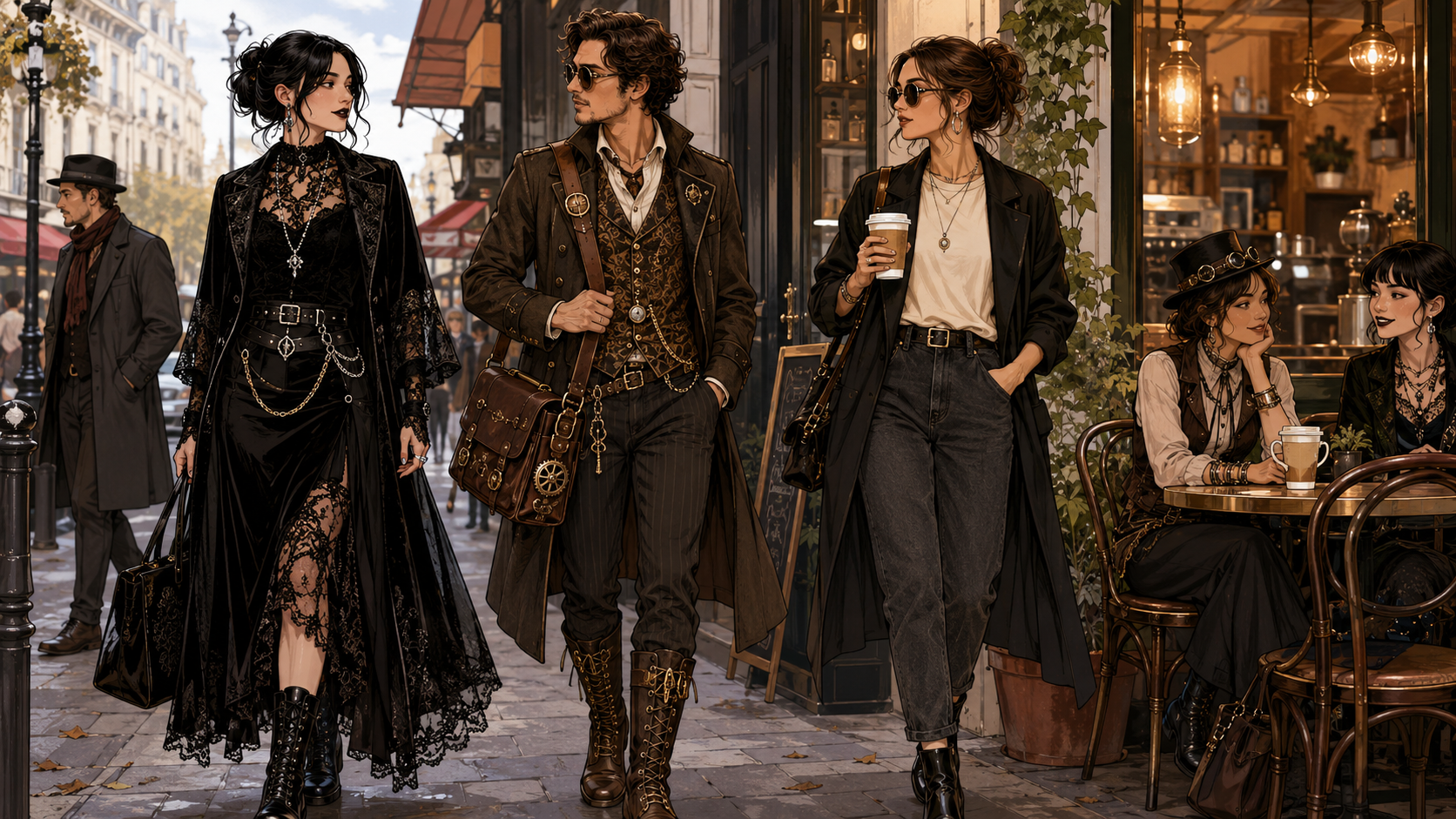
Not every dramatic outfit belongs at a convention, and not every piece of cosplay needs to stay in a storage bin until October.
For people who love expressive clothing, the line between costume and everyday wardrobe has become more flexible. A velvet jacket, lace-up boots, a pocket watch necklace, a dark flowing skirt or a waistcoat with brass buttons can look theatrical in one setting and perfectly stylish in another. The difference often comes down to balance.
Goth and steampunk are two of the easiest styles to borrow from because both already have strong visual identities. Goth leans dark, romantic, moody and sometimes severe. Steampunk borrows from Victorian fashion, industrial fantasy, old machinery and alternate history. Both can look like cosplay when worn head to toe. Both can also become wearable, personal and surprisingly practical when broken into pieces.
The trick is not to ask whether an outfit is “too much.” The better question is whether it feels intentional.
Know the difference between costume and influence
Cosplay is about becoming a character. Daily style is about becoming yourself, only more clearly.
That distinction matters. A steampunk airship captain costume might include goggles, a frock coat, striped trousers, a cravat, brass gadgets, gloves and a prop ray gun. Worn all together, it announces a character. Worn separately, many of those items can become fashion.
A waistcoat over a button-down shirt can look sharp. Lace-up boots can work with jeans. A long coat can become a signature piece. A watch chain can be interesting without becoming a full convention look.
The same is true of goth style. Black lace, silver jewelry, heavy boots, dark lipstick, velvet, chokers and dramatic silhouettes can be costume-like when piled together. But one or two pieces can add depth to an ordinary outfit.
Think of cosplay as the full orchestra. Everyday style is the melody you hum on the way to the grocery store.
Goth works best when texture does the talking
People often reduce goth style to “wear black,” but the best goth-inspired outfits rely on texture.
Black denim, black cotton, black velvet, black leather, black lace and black knitwear all say different things. A black T-shirt and jeans can look plain. Add a velvet jacket, silver pendant and boots, and the outfit gains intention without becoming theatrical.
For daily wear, texture keeps goth from looking flat. Lace cuffs under a cardigan, a black mesh sleeve, a long ribbed skirt, a soft oversized sweater, a dark floral scarf or a matte black boot can suggest the style without demanding full commitment.
Color does not have to disappear entirely. Deep burgundy, forest green, charcoal, plum, bone white and midnight blue can all sit comfortably in a goth-adjacent wardrobe. The goal is atmosphere, not uniformity.
Steampunk needs restraint more than gears
Steampunk can go wrong fast when every accessory looks like it came from a hardware drawer.
A little brass goes a long way. So do buckles, watch chains, leather straps, vests, antique-style jewelry and structured coats. The goal is not to glue gears to everything. The goal is to suggest an old-world mechanical romance.
A modern steampunk-inspired outfit might be simple: brown boots, dark jeans, a cream shirt, a fitted vest and a weathered leather bag. A skirt, blouse and cropped military-style jacket can also carry the mood. Add one antique-looking accessory and stop.
Goggles are usually the dividing line. They are fun at a convention, in a photo shoot or at a themed event. In a coffee shop, they are likely to read as costume unless the wearer is very committed to making them part of a larger personal style.
For everyday wear, steampunk is strongest when it feels like a person with unusual taste, not a character who got lost on the way to the dirigible.
Start with one statement piece
The easiest way to bring cosplay into daily fashion is to choose one dramatic item and let the rest of the outfit support it.
If the coat is dramatic, keep the shirt and pants simple. If the boots are heavy and elaborate, let them be the focus. If the necklace is large, avoid stacking too many competing accessories. If the skirt has volume, pair it with a fitted or casual top.
A single statement piece gives the outfit personality. Too many statement pieces can make it look like the closet exploded.
This rule also helps with comfort. A person may enjoy wearing a full costume at a convention, but daily life includes errands, weather, chairs, stairs, car seats, office lighting and people asking whether there is a play later. One strong piece is easier to live in.
Make it useful
The most wearable dramatic clothing usually does something practical.
Boots should be walkable. Coats should be warm. Bags should hold actual belongings. Belts should fit. Hats should survive wind. Gloves should allow a person to use a phone or open a door.
A leather satchel looks steampunk and carries lunch. A long black cardigan looks goth and keeps the office chill away. A waistcoat adds shape and pockets. A dramatic scarf adds style and warmth.
When theatrical clothing has a job, it feels less like costume. It becomes part of life.
This is especially important for people who want a signature look. A beautiful but useless item becomes occasional. A beautiful useful item becomes personal style.
Use modern basics as an anchor
The simplest way to keep goth or steampunk elements wearable is to mix them with modern basics.
Pair a Victorian-style blouse with jeans. Wear combat boots with a simple dress. Put a waistcoat over a plain T-shirt. Add a dark lace kimono over a tank top and leggings. Wear a long coat with sneakers. Mix an antique pendant with a casual sweater.
The contrast keeps the outfit grounded. It tells the eye that this is fashion, not a period costume.
Modern hair, simple makeup or ordinary outerwear can also soften a theatrical piece. A person does not need to dress from head to toe in one aesthetic. In fact, the most interesting outfits often look collected over time.
Dress for the room, then bend the rules
Daily cosplay-inspired fashion works best when it respects context.
A workplace may allow black boots, dark jewelry and a structured vest but not fishnet sleeves or a floor-length cape. A dinner out may welcome velvet and dramatic makeup. A school pickup, grocery trip or doctor’s appointment may call for toned-down versions.
This is not surrender. It is styling.
The person who understands the room can bend the rules more effectively. A tiny bit of theatricality in a conservative setting may stand out more than a full costume at a festival.
For everyday life, the goal is not to shock everyone. It is to feel like yourself while still being able to move through the day.
Confidence is the real accessory
A dramatic piece worn apologetically can look awkward. A dramatic piece worn naturally can look effortless.
That does not mean everyone must be loud, fearless or immune to stares. Confidence can be quiet. It can be as simple as choosing the boots, leaving the house and not explaining them.
People often accept unusual style faster when the wearer treats it as normal. The first time a person wears a waistcoat to the office, people may comment. By the fifth time, it is just their thing. The same goes for black lace, antique jewelry, dramatic coats or heavy boots.
Personal style becomes believable through repetition.
The best look is lived-in
Goth and steampunk fashion do not have to stay locked inside cosplay. They can become part of daily life when handled with editing, comfort and intention.
A person does not need to choose between jeans and fantasy. A little drama can live in the weekday wardrobe. A jacket can carry a hint of airship captain. A pair of boots can suggest a gothic novel. A necklace can feel like a secret story. A black dress can be practical and romantic at once.
Is it goth? Is it steampunk? Is it cosplay?
Maybe a little.
The better question is whether it feels like something you can actually live in. If the answer is yes, then it is no longer just a costume. It is style.
========
Maren Ashcroft is a style and culture writer who focuses on expressive fashion, everyday creativity and the places where subcultures meet ordinary life. She writes about clothing as both personal armor and daily storytelling. This article was written, in part, utilizing AI tools.






Comments