Hate Shoes but Can’t Go Barefoot? Consider These Alternatives
Published in Fashion Daily News
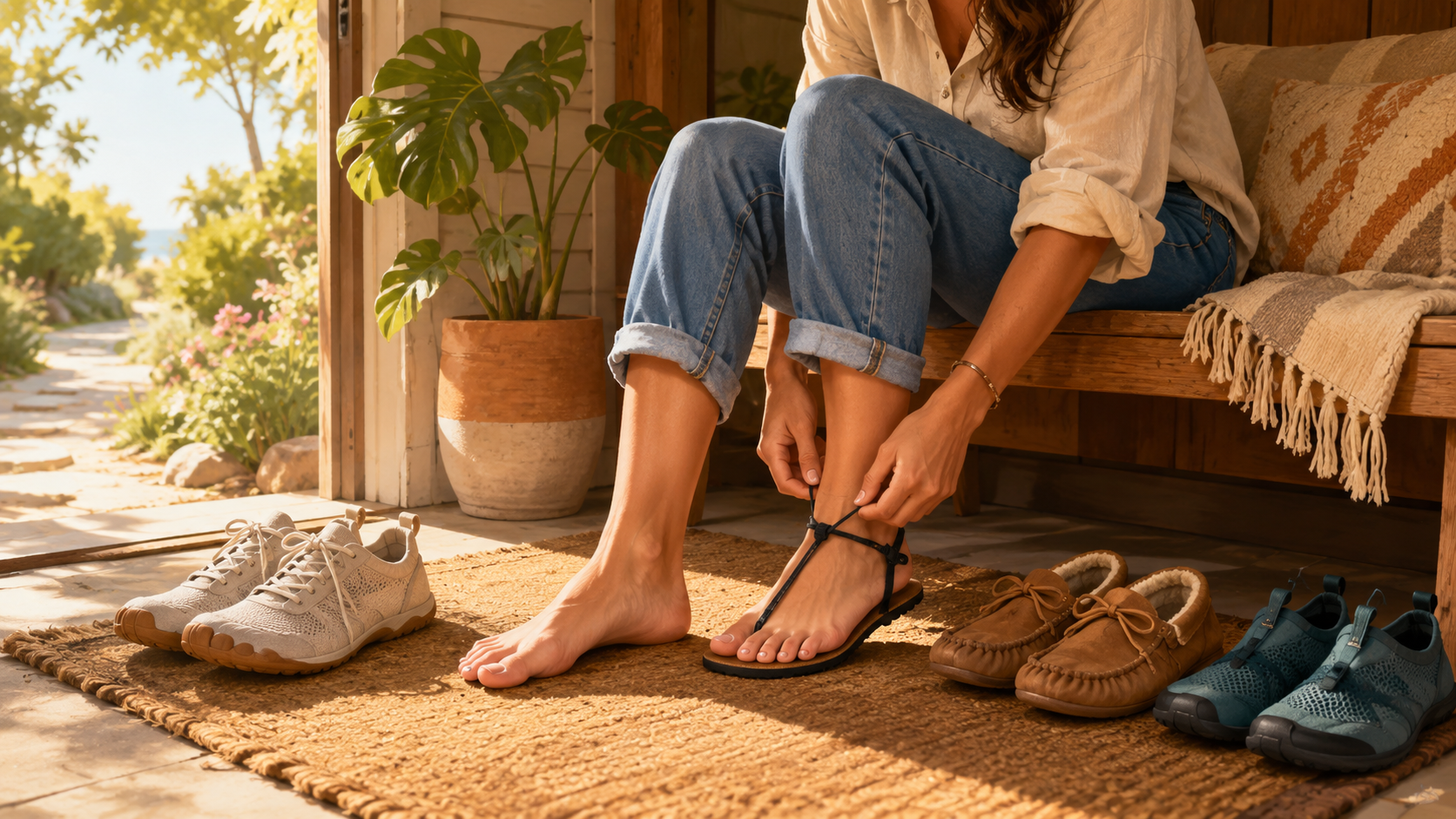
Some people tolerate shoes. Others love them. And then there are the people who put on shoes only because restaurants, stores, sidewalks, workplaces, cold weather, broken glass and basic social expectations keep interfering with a perfectly good barefoot life.
For the shoe-averse, the problem is not vanity. Shoes can feel hot, stiff, confining and weirdly loud. They squeeze toes, trap sweat, dull the ground and remind the feet that they have been packaged for public consumption. But going barefoot is not always practical, safe or allowed. That leaves a middle path: footwear that protects the sole without making the foot feel imprisoned.
The best alternatives will not feel exactly like being barefoot. Nothing does. But some options come close enough to make daily life easier, especially for people who want flexibility, open air, ground feel and room for their toes.
Start with what bothers you about shoes
Before buying anything, identify the specific problem.
Some people hate closed toes. Some hate thick soles. Some cannot stand tight uppers, arch pressure, heel lift, narrow toe boxes or sweaty materials. Others hate the feeling of socks, laces or heavy tread. A good alternative depends on the irritation.
If the goal is simply more air, sandals may solve the problem. If the goal is natural foot movement, minimalist shoes may be better. If the issue is workplace appearance, a wide-toe dress shoe might be the compromise. If the problem is cold floors, flexible house shoes or thin moccasins may be enough.
The more precise the complaint, the better the solution.
Minimalist sandals may be the closest compromise
For people who would be barefoot everywhere if society would cooperate, minimalist sandals are often the first place to look.
They usually have thin, flexible soles, little structure and straps that leave most of the foot exposed. The foot can spread, flex and feel the surface beneath it while still getting protection from hot pavement, gravel, stickers and public rules.
Earth Runners are one well-known example. The company markets its sandals as minimalist adventure sandals with Vibram soles, a footbed designed for grip and a conductive lacing system. For barefoot-minded people, the appeal is obvious: They are closer to a sole strapped to the foot than a traditional shoe wrapped around it. ([Earth Runners][1])
Sandals in this category are not for everyone. Some people dislike toe posts or between-the-toes straps. Others need more cushioning for long days on concrete. But for people who want maximum freedom with minimum footwear, they can feel like permission to rejoin civilization without fully surrendering.
Look for wide toe boxes
A major reason shoes feel awful is that many are shaped more like fashion objects than feet.
A wide toe box gives the toes room to spread naturally instead of being pressed into a point. This matters even for people who are not interested in barefoot-style footwear. Toes that can move tend to feel less trapped. The foot feels more stable. The shoe feels less like a clamp.
Many minimalist and “foot-shaped” brands emphasize wide toe boxes, but so do some comfort and walking-shoe companies. The key is not just sizing up. A shoe can be larger and still narrow. Look for shoes that are shaped wider at the front rather than merely longer.
If your toes are touching the sides or front of the shoe while standing, walking downhill or spreading your weight, the shoe is not doing its job.
Consider zero-drop and low-drop shoes
Traditional shoes often raise the heel higher than the forefoot. Zero-drop shoes keep heel and forefoot at the same height. Low-drop shoes reduce the height difference without eliminating it completely.
For barefoot fans, zero-drop footwear can feel more natural because it places the foot flatter to the ground. But it also changes how the calves, Achilles tendons and feet work. People who have spent decades in cushioned, heel-raised shoes should not switch overnight and then go for a five-mile walk.
Minimalist footwear can increase stress on the feet and lower legs if the body is not adapted to it. Foot and running experts commonly recommend a slow transition rather than an abrupt change, especially for people with prior foot problems, Achilles issues or plantar fasciitis. ([HMP Global Learning Network][2])
A good rule: Start with short, easy use. Let the feet and calves adapt. Pain is not proof of progress.
Try barefoot-style closed shoes when sandals won’t work
Sandals are not always enough. Some workplaces require closed-toe shoes. Some restaurants frown on visible toes. Some seasons are simply too cold.
Barefoot-style closed shoes aim to solve that problem. They often combine a wide toe box, flexible sole, low or zero drop and lightweight materials. They look more like shoes than sandals, but they feel less restrictive than conventional footwear.
These can work well for errands, travel, casual offices, walking and indoor use. Some models look athletic, while others are designed to pass as casual shoes or even dress shoes. They are especially useful for people who want ground feel but need more coverage.
The trade-off is that closed shoes, even good ones, still trap heat and reduce air flow. For the committed barefoot person, they may be the winter coat of footwear: necessary sometimes, loved rarely.
Use moccasins, slippers or soft house shoes indoors
Not every footwear problem happens outside.
Some people live barefoot at home but need something for cold floors, rough decks, garages or quick trips to the mailbox. Soft-soled moccasins, flexible slippers or thin house shoes can offer enough protection without feeling like real shoes.
The best versions are light, flat and roomy. Avoid stiff slippers with clunky soles if the goal is barefoot comfort. A slipper that changes the way you walk may annoy you as much as a shoe.
For people who are barefoot indoors but need occasional protection, this category is often the easiest compromise. It does not require a lifestyle conversion. It just keeps the feet warm or protected when bare skin is not ideal.
Water shoes can be surprisingly useful
Water shoes are not just for beaches and rivers.
Many are lightweight, flexible, quick-drying and roomy enough for casual use. They can be useful for gardening, kayaking, camping showers, pool decks, rocky beaches, hot patios or messy outdoor chores. Some look too aquatic for everyday errands, but others pass as casual slip-ons.
They are not usually as durable or attractive as purpose-built minimalist shoes, and some have slippery or overly soft soles. Still, for people who hate structured footwear, water shoes can be a cheap experiment.
They also travel well. A pair can be packed flat and used in hotel rooms, rest stops, pools, beaches or anywhere bare feet might be questionable.
Do not ignore safety
Barefoot-style footwear is about freedom, not proving a point.
People with diabetes, neuropathy, poor circulation, balance problems or recurring foot injuries should be more cautious about going barefoot or using extremely minimal shoes. Reduced sensation can make small injuries dangerous because cuts, burns or blisters may go unnoticed. Some medical sources advise people with diabetes to wear protective footwear even indoors. ([Verywell Health][3])
Terrain matters, too. Minimal sandals may be fine on a trail for one person and miserable on sharp gravel for another. Thin soles on hot pavement can become painful quickly. Winter conditions require insulation and traction. Restaurants, workplaces and public venues may have rules that must be followed.
The goal is not ideological purity. It is comfortable, sensible freedom.
Transition slowly
Feet adapt, but they do not adapt instantly.
A person who has worn cushioned, supportive shoes for years may have weaker foot muscles, tighter calves or a different walking pattern than someone who has spent years barefoot. Switching to thin soles all day can lead to soreness or injury.
Start with short walks or brief errands. Rotate footwear. Pay attention to calves, arches, heels and Achilles tendons. Increase time gradually. If something hurts in a sharp or persistent way, back off.
Barefoot-style footwear can make the feet feel more awake. That is part of the appeal. But “more sensation” also means more responsibility.
The best shoe may be the least shoe
For people who hate shoes, the answer is rarely to find the most supportive, padded, engineered shoe on the shelf. It may be to find the least shoe that still solves the problem.
That might be Earth Runners for summer errands, barefoot-style closed shoes for work, moccasins for the house, water shoes for travel or roomy sandals for everyday wear. It might be a small rotation rather than one perfect pair.
You may not be able to go barefoot everywhere. But you can often get close.
And for the shoe-hater, close counts. A thin sole, open air, room for the toes and a little ground feel can turn footwear from a prison sentence into a practical compromise.
========
Nella Voss is a lifestyle and wellness writer who focuses on practical comfort, everyday movement and low-fuss living. She writes about home routines, personal style and small changes that help people feel more at ease in their own bodies. This article was written, in part, utilizing AI tools.





Comments