Twin Cities churches demand full disclosure of Operation Metro Surge surveillance
Published in Religious News
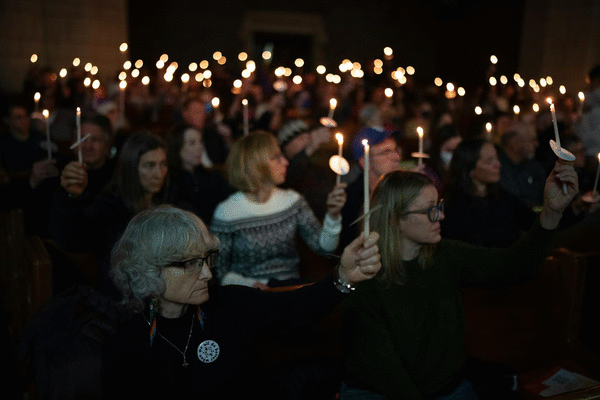
MINNEAPOLIS — In trying to build cases against Twin Cities protesters, undercover federal agents attended organizing meetings at several churches in Minneapolis and St. Paul, photographed people and vehicles and collected license plate numbers. Now, three churches named in federal investigation records want the government to reveal the full breadth of surveillance that occurred on their properties during and after Operation Metro Surge.
References to First Universalist Church and Hennepin United Methodist Church, both in Minneapolis, and St. John the Evangelist Episcopal Church in St. Paul appeared in discovery materials in the case.
The U.S. Attorney’s Office has accused 15 anti-immigration-enforcement activists of being part of an “Antifa” conspiracy to impede Metro Surge. More than 1,000 pages of evidence have been made public. While the churches haven’t been charged with any wrongdoing, federal prosecutors have described a network of progressive unions, businesses and nonprofits as being intertwined in the “conspiracy.”
“What they encountered here was folks engaged in peaceful resistance to the government harming their neighbors,” said the Rev. Jen Crow of First Universalist Church. “We had hundreds of clergy here in January who were responding to our request for clergy to come from across the nation and push back against the harms ICE was doing here.”
Investigation reports say that, on Dec. 13, 2025, an undercover agent attended a meeting called “Action Training: How to Stop ICE And Build a Revolution,” that the protest group Sunrise Movement hosted at First Universalist Church. Sunrise Movement described its activities as nonviolent, direct action civil disobedience, and discussed ideas such as calling ICE with bogus tips, bullying agents and hotel noise demonstrations.
Because participants allegedly debated the pros and cons of actions that could cross into breaking the law, such as blockading ICE vehicles, the undercover agent decided further attendance was “necessary to rule out violations of law.”
On Feb. 26, agents followed one of the Minnesota 15 defendants, folk singer Emmett Doyle, to Hennepin United Methodist Church, where he met several people and put some “ICE OUT” signs in his truck. Agents recorded the whole interaction and took down vehicle information for all attendees.
The following month, special operation groups set up surveillance around St. John’s. While one undercover agent went inside to participate in an evening meeting of a direct action protest group, other agents collected a dozen license plate numbers of others who had come for the meeting.
They returned to St. John’s as late as April to attend another meeting and collect more license plates. That time, a man conducting counter-surveillance approached their vehicle and asked if they were ICE. An agent, who was disguised in a safety vest and hard hat, said they were not.
The notes came from a Homeland Security Investigations case titled “Project Whipple Shield.”
The churches suspect there are more files on surveillance of their properties than have been disclosed so far, and they want the federal government to show everything. They filed an amicus curiae brief Wednesday in support of the Minnesota 15 defendants’ demand for further discovery.
The churches are “focused on keeping open doors as a welcoming and inclusive faith community, and the federal government tried to take advantage of that very faith-based mission and began an unlawful surveillance campaign,” said the churches’ lawyer Irina Vaynerman of Groundwork Legal. “The targeting of the religious freedom here is particularly horrific.”
The Minnesota 15 defendants filed a motion earlier this summer seeking additional records they believe will show the investigations were more concerned with suppression of protected political activity rather than criminal conduct. They’re demanding Whipple Shield reports that have been withheld, AI facial recognition data and internal discussions of charging decisions.
The Department of Homeland Security has repeatedly said it does not comment on investigations. The U.S. Attorney’s Office pushed back on the defense’s request, arguing some of what they’re asking for could endanger confidential informants and undercover agents in unrelated, ongoing investigations.
The motion is still pending.
The Cato Institute, a libertarian think tank, also filed an amicus brief in support of revealing more surveillance records, arguing that by going after people who are just ideologically opposed to its policies, the federal government is eroding civil rights in the name of fighting terrorism.
A fourth Twin Cities church that had been surveilled, Minneapolis’ University Baptist Church, is part of an ongoing federal lawsuit in Massachusetts that argued federal agents should be held in contempt for violating an injunction specifically barring them conducting enforcement operations at Baptist churches because of the sensitive nature of places of worship. In that case, the government has countered that investigating activists for potential criminal conduct is different from immigration enforcement.
_____
©2026 The Minnesota Star Tribune. Visit startribune.com. Distributed by Tribune Content Agency, LLC





Comments