Stephen Mihm: Thomas Jefferson's DNA punctures America's slavery amnesia
Published in Op Eds
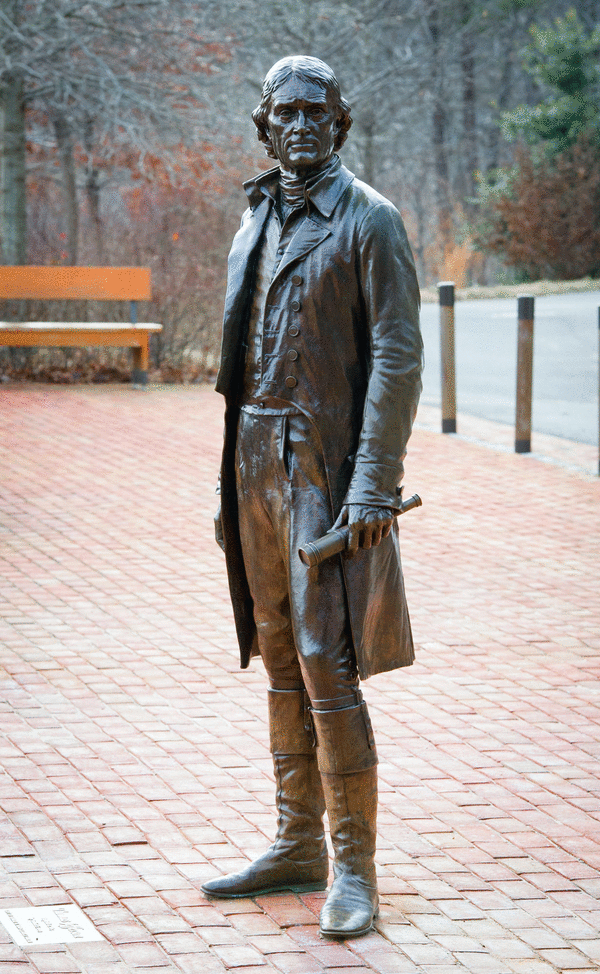
New research using a strand of hair from Thomas Jefferson has effectively settled a longstanding, acrimonious debate: He almost certainly fathered children with Sally Hemings, a young Black woman he enslaved.
The latest scientific discovery, announced last month, is the result of a collaboration between the Smithsonian and researchers at the University of California, Santa Cruz.
Many of Jefferson’s contemporaries were well aware of this relationship along with the ubiquity of such interracial liaisons. So the fact that generations of historians and Jefferson defenders have struggled to accept this possibility is a testament to our nation’s amnesiac relationship with slavery, and, no less important, the peculiar reordering of racial categories that followed its abolition. (1)
But one cannot simply wish away written records. Consider the account of lawyer Josiah Quincy Jr. of Boston. When he visited North and South Carolina in 1773, he came away stunned by what he saw.
Sex between masters and people who were enslaved, he confided to his journal, “is spoken of as quite a common thing: no reluctance, delicacy or shame is made about the matter. It is far from being uncommon to see a gentleman at dinner, and his reputed offspring a slave to the master of the table. … The fathers neither of them blushed or seem[ed] disconcerted. They were called men of worth, politeness and humanity.”
Things began to change after the U.S. broke away from Great Britain, its independence fueled by revolutionary ideas about equality and liberty. These ideals weren’t very compatible with the institution of slavery, to say nothing of the sexual abuses and coercion associated with it. As a consequence, many defenders of slavery preferred to adopt what historian Joshua Rothman has described as a “cultural code of public silence” on such matters, banning interracial marriage but silently tolerating sexual relationships between White men and enslaved Black women.
That agreed-upon silence made the public airing of Jefferson’s interracial affair so shocking. Accusations came from James Callender, a political pamphleteer who had spent much of the 1790s attacking elite Federalists. By 1802, Callender had fallen out with former allies like Jefferson, and he turned on the president.
Callender wrote that Jefferson, “whom it delighteth the people to honour, keeps, and for many years past has kept, as his concubine, one of his own slaves. Her name is SALLY.” Callender went on to enumerate a now-familiar host of charges, the most notable of which was that Jefferson, the philosopher of equality, had fathered multiple children with Hemings, all of whom remained enslaved.
The charges stuck, and Jefferson’s Federalist opponents ran with the allegation, writing poems mocking the president, while others sketched not-so-subtle political cartoons that showed Jefferson as a rooster next to his hen, Hemings.
But Jefferson’s domestic situation was well known in Virginia; his friend, John Hartwell Cocke, described the situation as typical, where “bachelor and widowed slave owners” took an enslaved woman as “a substitute for a wife.”
By 1850, the federal census added a new racial category that tacitly acknowledged the growing number of mixed-race people as “mulatto.” In Jefferson’s home state of Virginia, census takers enumerated more than 44,000 such individuals, or 10% of the total enslaved population. The rest of the South wasn’t all that different, even if the numbers tended to be a little lower relative to the total population.
The implications of so many enslaved, mixed-race individuals were obvious to anyone living in the antebellum era. Rebecca Ann Latimer, who belonged to a prominent planter family, described how “there were violations of the moral law that made mulattoes as common as blackberries.”
If the people who lived during that time could make such acknowledgments, why have Americans today struggled to accept what was?
One answer lies with how individual states policed racial categories after the Civil War. Some southern states initially repealed many of the laws forbidding sexual or marital relationships between the races, but the move was short-lived. The violent death of Reconstruction, the disenfranchisement of Black people, and the rise of the Jim Crow South redrew boundaries.
This inevitably raised questions about the fate of mixed-race individuals. In Virginia, as in other states in the South, racial categories hardened, and the older system, which tolerated a degree of ambiguity in racial identity, was replaced by the infamous “one-drop” rule that effectively erased the possibility that anyone could be anything other than wholly Black or White in the eyes of the law.
Virginia did so in stages, beginning with its “Racial Integrity Act” of 1924, which divided the population into two groups, “white” and “colored.” It was followed six years later by an act that specified: “Every person in whom there is ascertainable any negro blood shall be deemed and taken to be a colored person.” Other states — including in the North — passed comparable laws, effectively banishing the racial ambiguity that was the legacy of sexual exploitation associated with slavery. The federal government removed the category “mulatto” in 1930.
The past few decades, by contrast, have been spent chipping away at the racial binaries put in place after the Civil War, with mixed-race individuals now formally recognized by the federal census beginning in 2000.
Those resistant to reckoning with these parts of American history do the republic no favors. Conversations about slavery and the people who benefited from or suffered under its power dynamics are not supposed to be easy. They are an opportunity for us to do better in the present, and the threshold could hardly be lower than recognizing the truth of what happened between Thomas Jefferson and Sally Hemings — and between the thousands of other masters and the women they enslaved.
____
(1) When DNA evidence linked Jefferson to Hemings’ descendants in the 1990s, skeptics pointed to the possibility that his brother or another male relative could have been the father.
____
This column reflects the personal views of the author and does not necessarily reflect the opinion of the editorial board or Bloomberg LP and its owners.
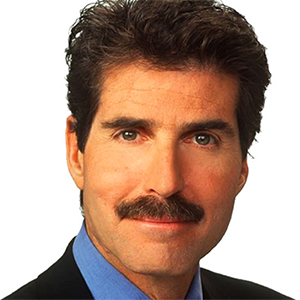
Stephen Mihm, associate dean and professor of history at the University of Georgia, is coauthor of “Crisis Economics: A Crash Course in the Future of Finance.”
©2026 Bloomberg L.P. Visit bloomberg.com/opinion. Distributed by Tribune Content Agency, LLC.










































Comments