Maryland Gov. Wes Moore unveils $57 million energy grants, but savings remain unclear
Published in News & Features
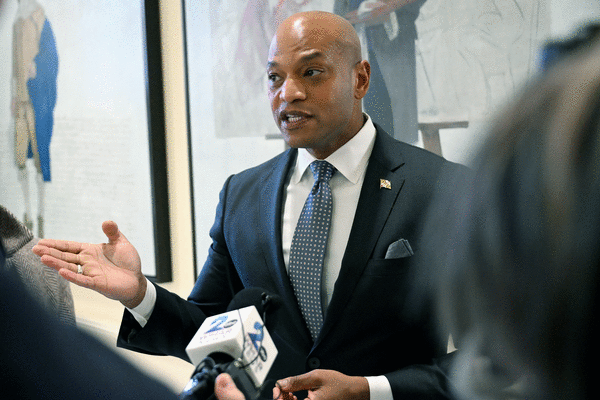
BALTIMORE — Gov. Wes Moore on Monday announced nearly $57 million in state grants for energy efficiency in schools, government buildings, nonprofits and low-income housing developments across Maryland, aiming to move away from fossil fuels.
The administration said the funding is part of a broader effort to lower utility costs for Marylanders, though it’s unclear by how much ratepayers could save.
The grants, administered by the Maryland Energy Administration, will fund 127 projects statewide, including HVAC replacements, geothermal systems, rooftop solar installations and weatherization upgrades.
The funding announcement comes after months of a broader debate in Annapolis over how Maryland finances its clean energy programs and whether those investments are actually reducing bills. Republicans have emphasized that the state’s primary climate financing tool — the Strategic Energy Investment Fund (SEIF) — comes from ratepayers’ pockets. Environmental advocates, meanwhile, warn that repeated budget transfers from the fund risk undermining long-term emissions goals and affordability gains.
Timothy Zink, the Maryland Energy Administration (MEA) communications and marketing director, said that the agency does not produce a single statewide estimate of savings for ratepayers because many grants are awarded directly to local governments in lump sums, with local counties and municipalities later deciding which projects to prioritize. Speaking to specific projects, however, Marylanders are expected to see more than $266 million in savings over the course of a fully fledged project’s timeline, he said.
He added that savings timelines will vary, with some projects reducing costs as early as this summer and others serving as longer-term investments.
“Every project will move forward on a unique timeline,” Zink told The Baltimore Sun in an email.
Moore’s office said the projects are expected to save about 33,226 megawatt-hours of energy over their lifetimes and reduce greenhouse gas emissions by more than 200,000 metric tons of carbon dioxide equivalent.
Several of the largest awards went to public school systems pursuing electrification and net-zero energy projects, including districts in Worcester, Washington and Prince George’s counties and Baltimore City.
The projects are funded through SEIF, which is financed primarily through proceeds from Maryland’s participation in the Regional Greenhouse Gas Initiative and utility compliance payments.
Last month, Moore signed a fiscal 2027 budget that redirected roughly $292 million from SEIF into the state’s general fund as lawmakers worked to close a budget deficit. The budget also used another $100 million from the fund to offset costs associated with the state’s EmPOWER energy-efficiency program and reduce monthly utility surcharges.
Republican lawmakers repeatedly targeted SEIF during the 2026 legislative session, emphasizing that the fund drives up utility bills because it relies on charges passed on to ratepayers. GOP leaders unsuccessfully pushed to eliminate both SEIF and the EmPOWER program, saying Marylanders are subsidizing state climate initiatives through their monthly energy bills.
Environmental groups supported continued investment in clean energy and efficiency programs. Still, they warned that continued transfers from SEIF could weaken the state’s ability to meet its emissions targets and deliver long-term affordability benefits.
Maryland has some of the nation’s most aggressive climate goals, including requirements to cut greenhouse gas emissions 60% by 2031 and reach net-zero emissions by 2045. Achieving those targets is expected to require widespread building electrification and expanded renewable energy development, though recent reports have shown the state is struggling to stay on track.
Zink said oversight measures include quarterly reporting requirements, compliance reviews and spot checks by the agency. He said the grants are reimbursed after expenses are incurred rather than distributed upfront.
________
©2026 The Baltimore Sun. Visit at baltimoresun.com. Distributed by Tribune Content Agency, LLC.






Comments